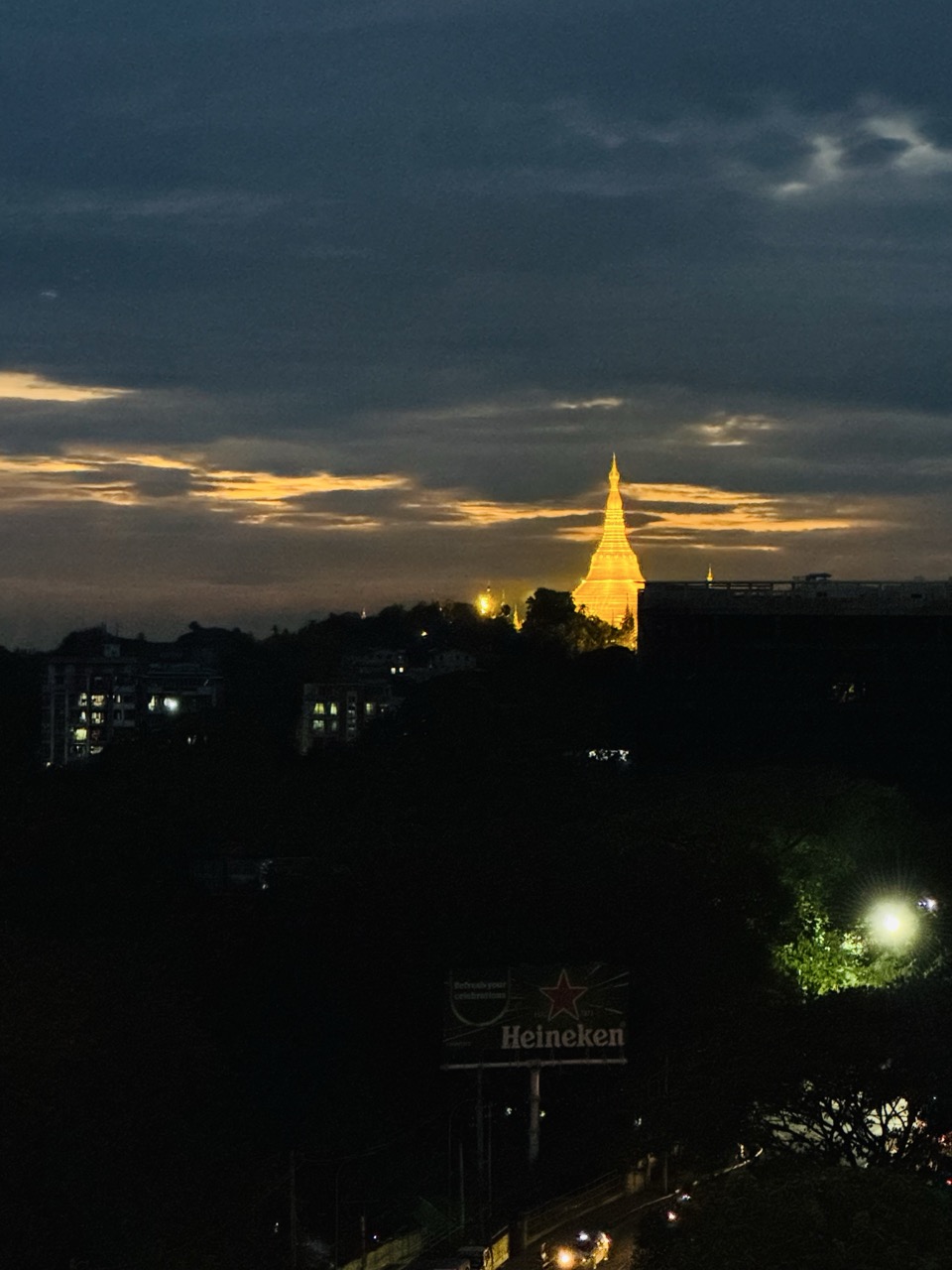
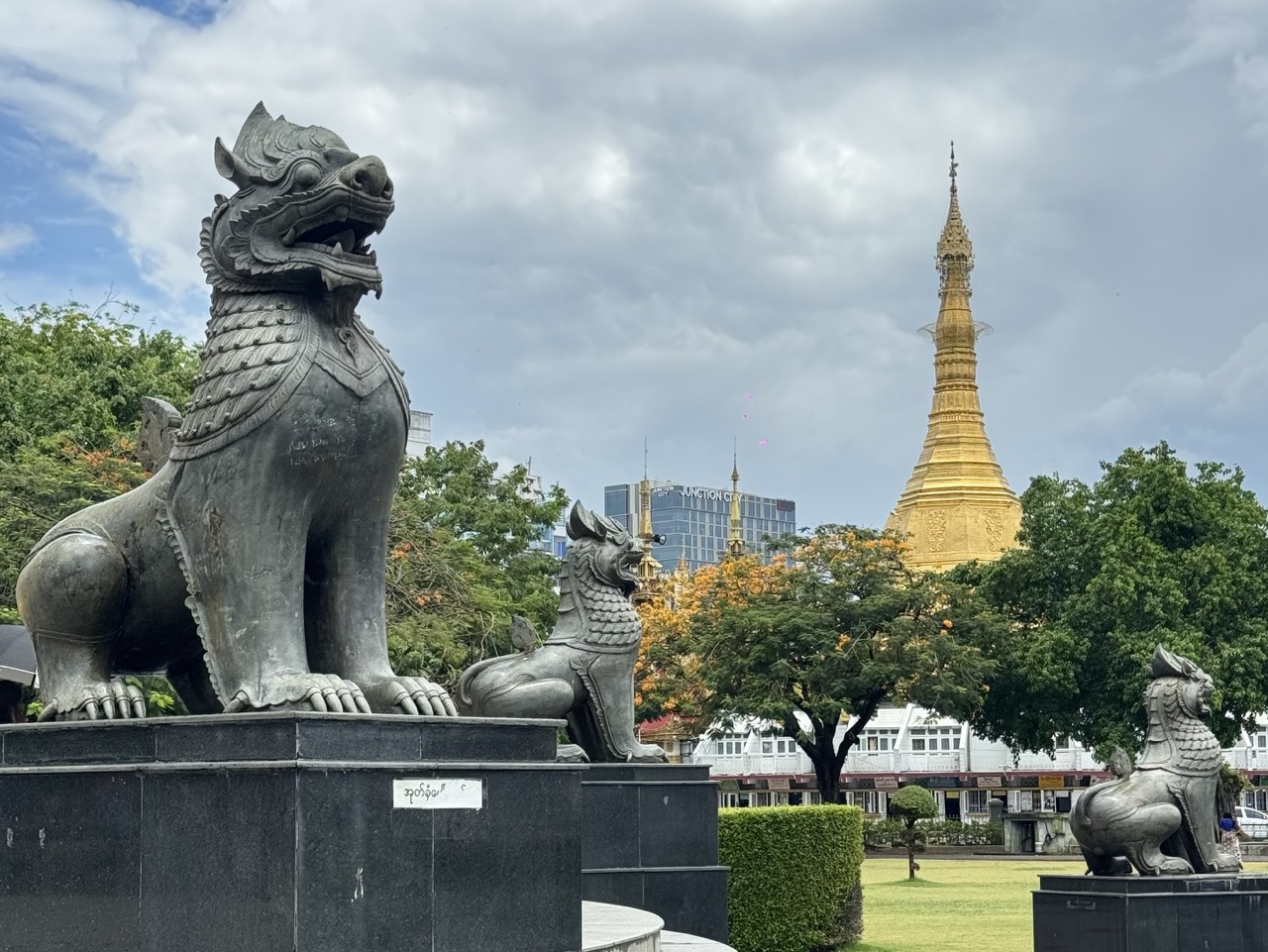
Living in Thailand for the past 3 years, Myanmar (Burma) was always right next door, a short 1-hour flight from Bangkok to Yangon, closer than flying to Phuket. The ongoing political situation has kept me away for over 5 years now. Eventually, it was time. Myanmar has a rich history and culture, the crossroads of India, China, and Thailand, and I wanted to see how those influences blend together.
Should You Go? The Ongoing Political Situation
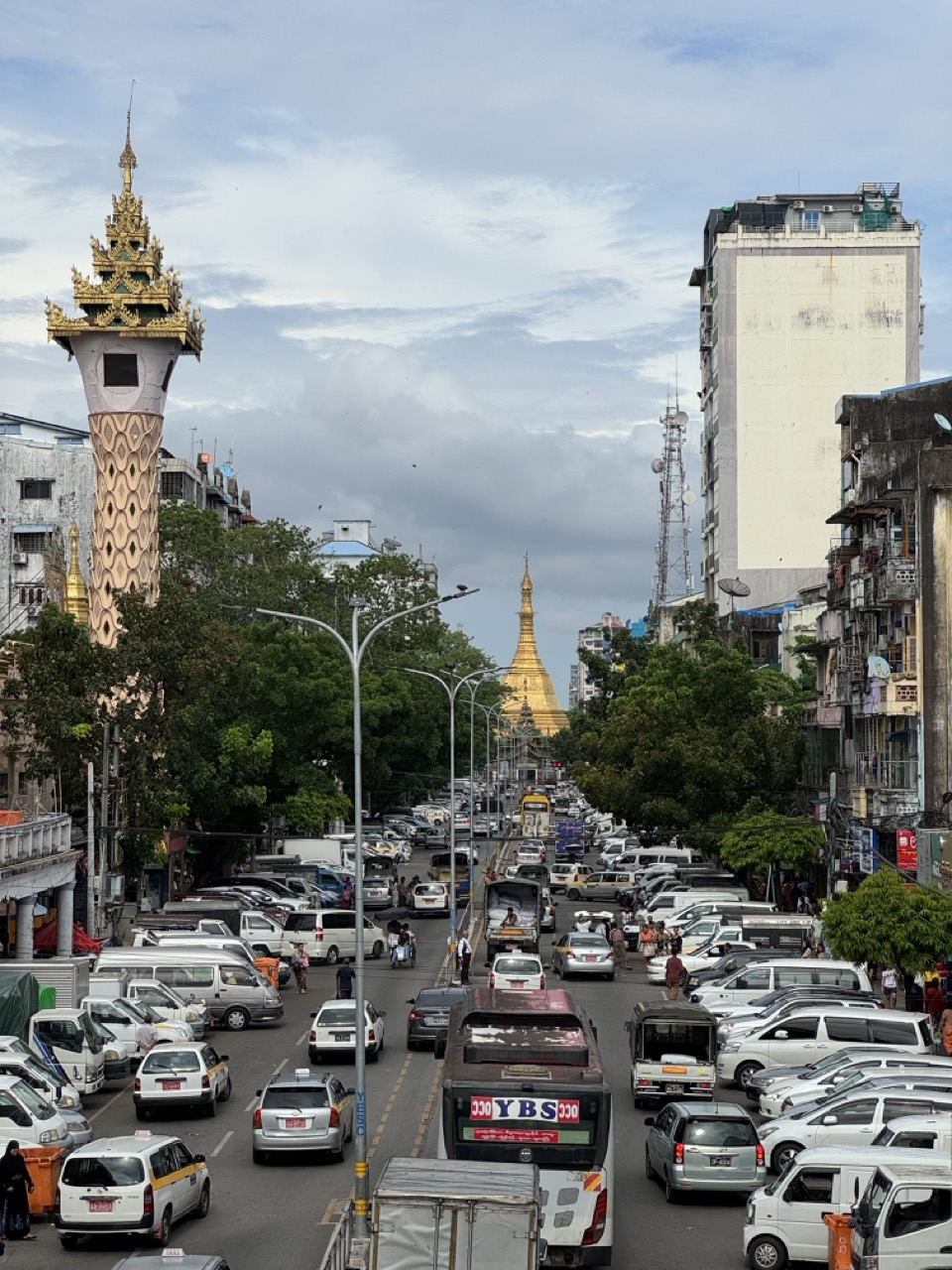
Short answer – yes. A little background: In February 2021, the military staged a coup against the civilian government, igniting a civil war that is still being fought to this day. Myanmar is a big country and most of the active warzones are nowhere near the main cities of Yangon, Mandalay, and Naypyidaw. I never once felt unsafe walking the streets of Yangon, even at night. Other than a few soldiers guarding the airport and some sprinkled in the city, you would have never known there’s a civil war in the country. Understandably some people might have reservations going to and spending money, which generates tax revenues for the military government. The people living in Yangon are getting on with their normal lives, trying to earn a living to put food on the table. Your visit supports them more so than anyone else. In talking to locals, you always hear this phrase “Due to the ongoing political situation,….”, and what follows is some quirk about some practical reality of life there. (Those quirks I’ll explain later when it comes to preparing for your trip.) For the people of Yangon, it’s an acknowledgment of reality and a desire to continue living life regardless. I heard it everywhere, and it stuck with me.
Visa & Entry
Fairly straightforward. You can apply for an evisa for up to 100 countries (USA included) via the official website:
You can check the specific entry requirements for your country here. The tourist evisa fee is $50 USD, and can be paid by credit card. Be sure to have a confirmed onward / return air ticket. I applied and got my evisa approved and emailed to me within a couple of days. It’s valid to enter Myanmar within 90 days of approval, with a stay of up to 28 days. At the time of writing, you’re only allowed to fly into Yangon, Mandalay, or Naypyidaw, not that you’d need to start your trip anywhere else.
When I landed in Yangon International Airport, immigration was straightforward with no issues. Print out your evisa document beforehand just in case you have trouble accessing it on your phone upon landing.
Before You Land: Digital Prep
Myanmar is not your typical country. A little prep beforehand goes a long way to making sure you have a smooth time there.
- VPN – set it up before you arrive: Facebook, WhatsApp, Instagram, are the major apps that are blocked in Myanmar at the government’s direction. Even if a site isn’t blocked, the website itself might decide to block any internet traffic going from Myanmar. This is why getting a VPN is necessary. Technically VPNs are illegal and carry a hefty penalty if found with one on your phone, but in reality, everyone – locals and foreigners – has one. Download, install, and test it to see if it works before arriving in Myanmar. You usually can’t download it once there, though JumpJumpVPN was an exception, and I was somehow able to download it in-country.
- ExpressVPN is used by most visitors. Very important note: you must play around the location you’re connecting to – the more obscure location, the better. Connecting to Hong Kong, Singapore, or other nearby places didn’t work. But I was able to connect if I chose USA - Boise or USA - Nashville for example.
- JumpJumpVPN was recommended to me by a local after I was having initial trouble with ExpressVPN. It’s completely free, but you need to watch an ad every 45 minutes to continue connecting. A minor inconvenience, but manageable.
- eSIM – skip buying beforehand, buy at the airport: I usually purchase my eSIM on Airalo or Nomad. I noticed this time, however, that neither of them offer one for Myanmar. I ended up getting one on a lesser known provider. Surprise, surprise – it didn’t work when I landed in Myanmar. Luckily there are vendors such as U9 (formerly Ooredoo) and ATOM that sell eSIMs conveniently at the airport. I went with U9. My package was 24 GB (just data, no phone) for 35,000 kyats (9 USD), plenty for my entire stay. So just get an eSIM when you land at the airport, the staff is very friendly and will help you set it up on your phone.
Money: The Currency Situation & Credit Cards
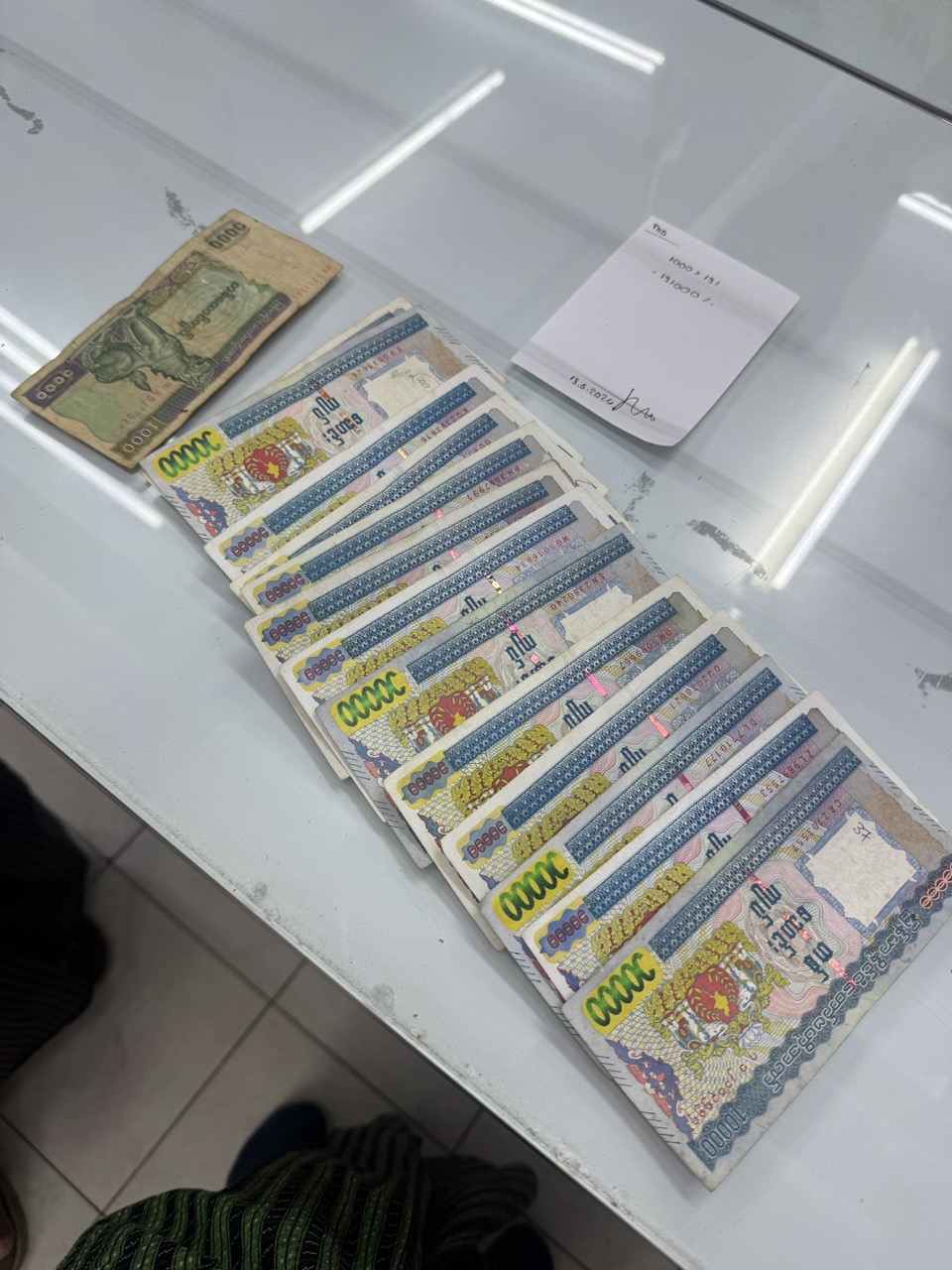
This is where you get brownie points for navigating the financial system in Myanmar. Firstly, credit cards are not guaranteed to work there due to sanctions. I brought two credit cards, and one of them didn’t work (even though I verified that the transaction was authorized by me), the system continued to decline it. However, my other credit card (with Chase) actually did work. Don’t rely on credit cards for payment since a lot of business and vendors don’t even take them. And the exchange rate is much better if you pay in cash instead.
A better bet is to use cash for everything. Myanmar is mostly still a cash country. Due to the ongoing political situation (see – I’m using the phrase myself now), it’s used more widely now, along with the demand for foreign currency. The local currency is called the kyat (pronounced chat), abbreviated MMK.
Bring your US dollars to exchange at a local money changer (more on that in the next section). US currency must be crisp, clean, without any tears or major creases, preferably in $100 dollar denominations for the best rates, though I’ve seen people use $20 or $50 bills. Better yet, since I was coming from Thailand, you can also exchange Thai baht banknotes for the same competitive rates as USD. And vendors are not sticklers if Thai banknotes are not as perfect. It’s actually better since the highest denomination is 1000 baht, which is about $30 USD. You don’t have to worry about exchanging large amounts and being stuck with unspent bills before you leave. You can’t really exchange kyat back into foreign currency, at least that’s what I’ve been told.
Now for the exchange rate. This is where it gets interesting. There are two rates: the official rate and the market rate (also called street or black market rate). The official rate is pegged at 2100 kyats to 1 USD. But the real rate was actually double that – around 4100 kyat / 1 USD – when I went. Download the app MMP / Myanmar Market Price (myanmarmarketprice.com) beforehand to review current market exchange rates in various currencies.
Lastly, exchange in a store, not on the street. If you get approached by a person in the street offering money exchange, ignore them. It’s most likely a scam. You can actually use Google Maps to find a money exchanger, but read the reviews first. What I did was ask my guide for a recommended place in the city, and I kept going back to the same place for the entire stay. You can also exchange at the airport initially to help pay for your cab into the city and your first meal into the city, but the rate is not as good. So just exchange a little bit.
Getting Around
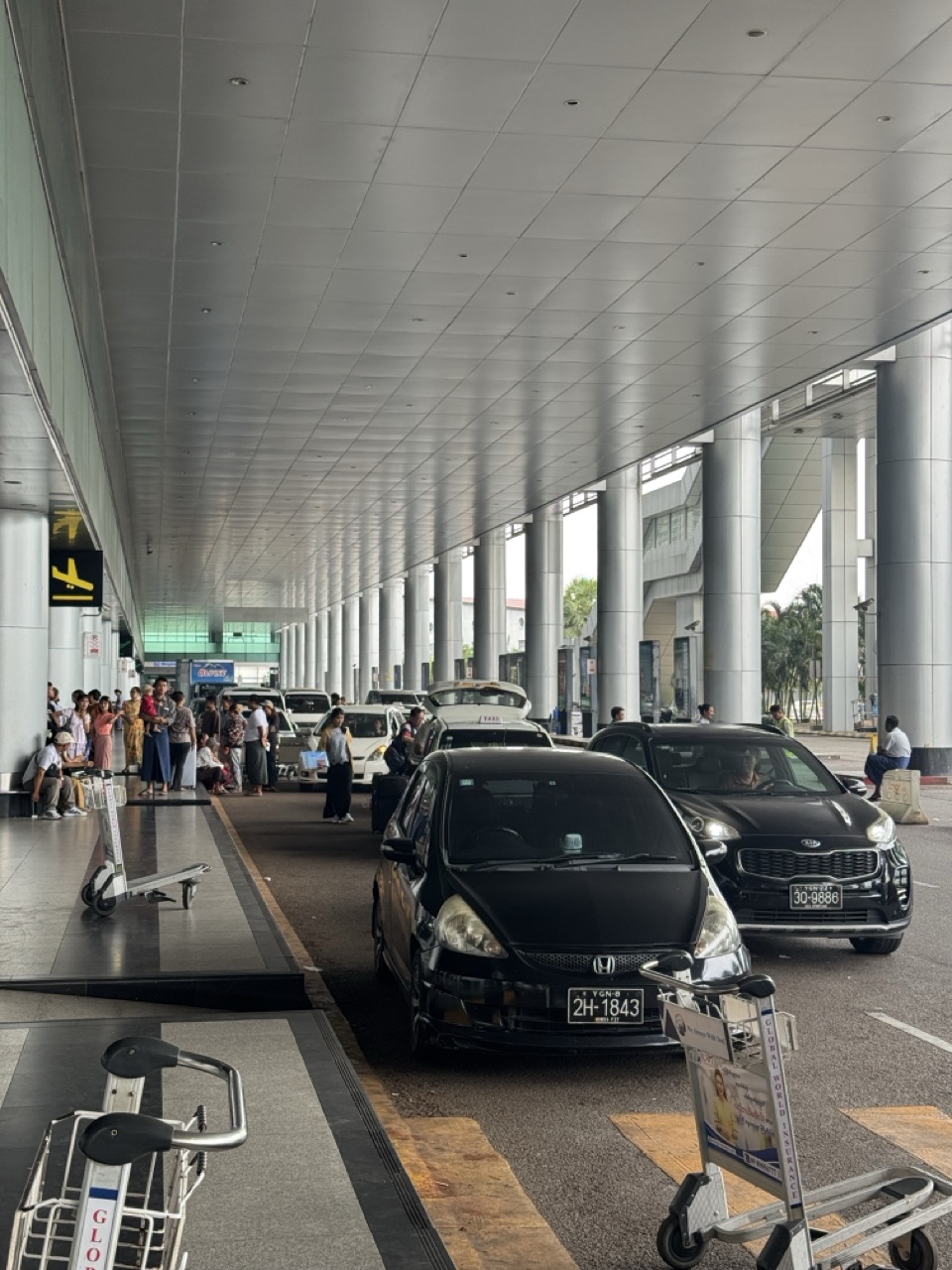
Use the Grab app for getting around the city. It’s a popular ride-hailing app used all across Southeast Asia, and Myanmar is no exception. If your credit card works, you can set it as the primary payment method in the app. If not, then choose cash payment instead. Most fares within the city center will be under $3 USD. Don’t bother hailing taxis on the street – most will overcharge you, and haggling is mentally draining.
Consider walking if the destination isn’t too far. I loved walking around Yangon and taking in everything happening around me. Buses are very popular with locals, but the routes are not clearly marked or easy for visitors to navigate, so I didn’t ride one, though I wanted to.
There is also the Circular Train route, boarding at Yangon Central Railway Station, which loops through the suburbs and back. It’s more of a sightseeing experience than a practical way to get around the city, which I’ll cover more below.
Where to Stay
Hotels in Yangon are remarkably affordable right now. The price difference between a standard vs luxury hotel is not that much. You could be paying $25 USD for a room at a standard place, or for only $65 USD, you can even stay at a 5-star property.
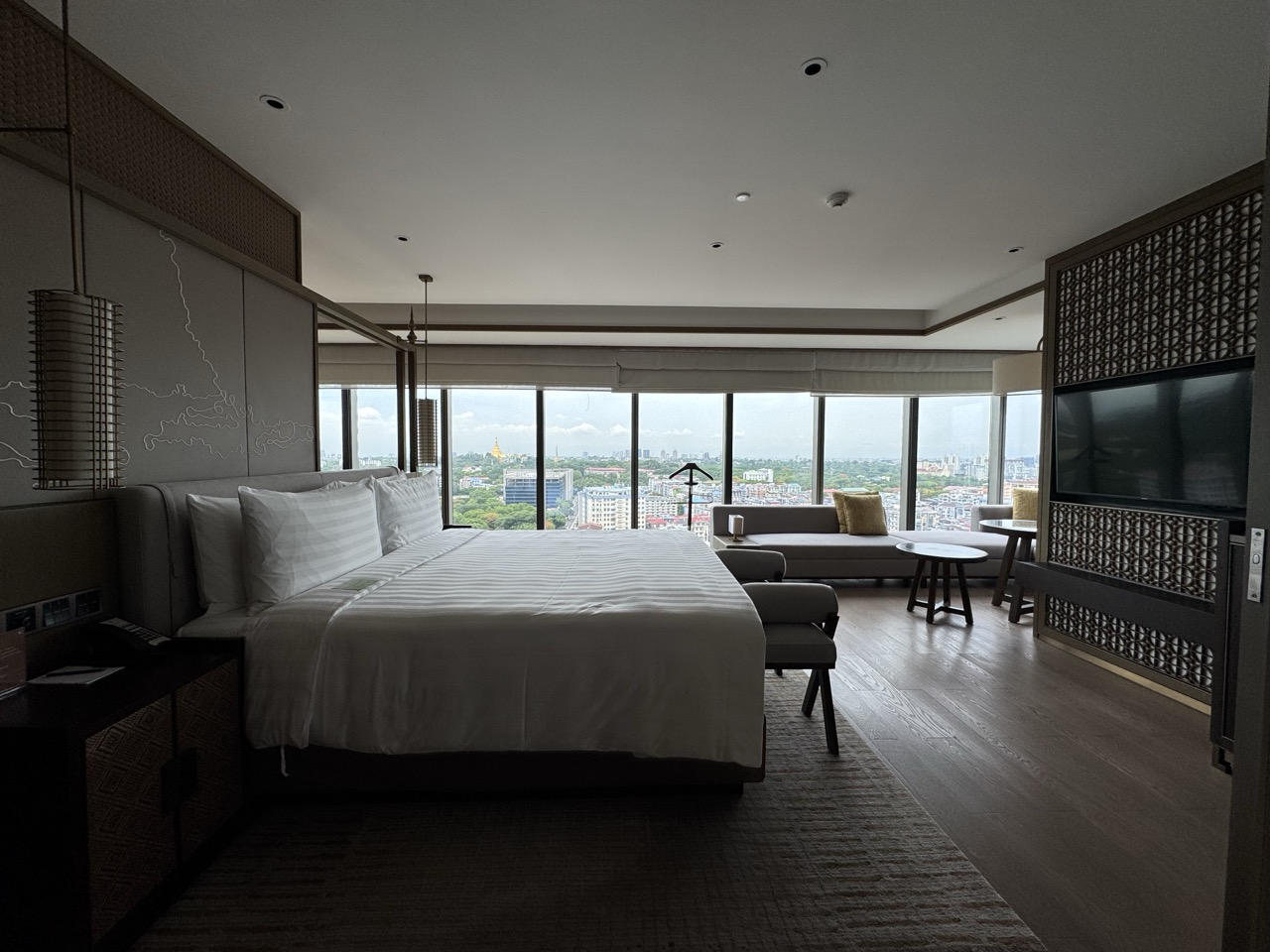
I stayed at the Pan Pacific Hotel because it was centrally located (5 minute walk to Bogyoke Aung San Market) and convenient. It’s also next to a mall, and I ducked in regularly for coffee or a snack from the supermarket. I paid under $100 USD for a mid-tier room, and I was even upgraded to the junior suite during my entire stay there. Their service and hospitality were exceptional (courteous and friendly), as were the amenities including a spacious outdoor pool with views of Shwedagon Pagoda and a well-equipped gym, which is rare in hotels.
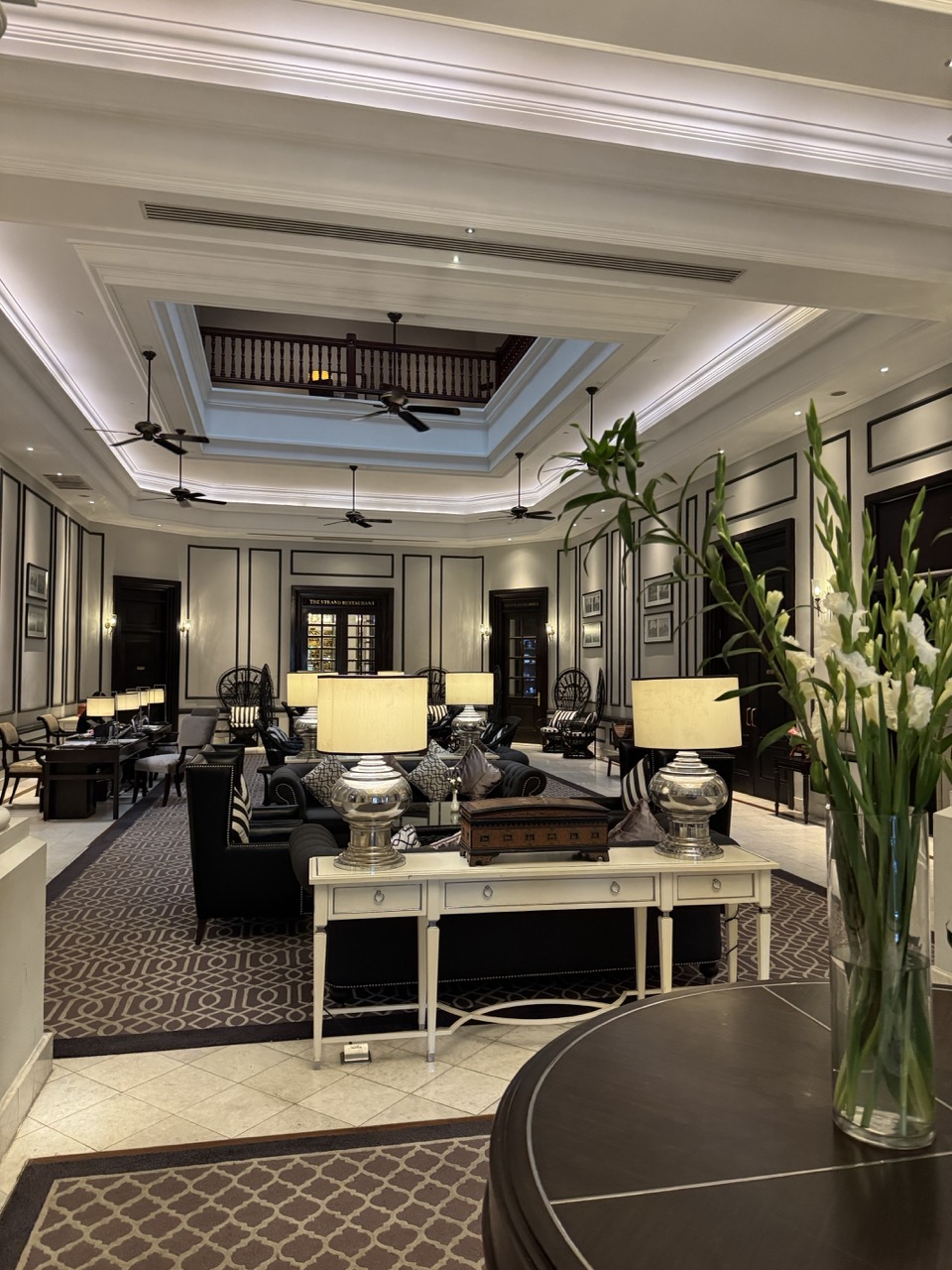
The Strand Hotel Yangon – probably the most storied hotel in the entire country. Originally opened in 1901 by the Sarkies Brothers, who also built the E&O Hotel in Penang, Malaysia and, most famously, the Raffles Hotel in Singapore. Walking through its interior takes you back to a different time. I was closely considering this hotel for its historic significance but decided on the Pan Pacific since I wanted something more modern. Even if you don’t stay here, it’s still worth a visit.
The Eravati Sule Grand Yangon – formerly a Rosewood property, housed in a colonial-era building that once served as the New Law Courts. Walk up the staircase to the lobby and you get a real sense of its history.
Governor’s Residence – served as the home of the British governors of Burma until the mid 20th century. It’s set away from the downtown area and has a more serene and romantic feel to it. Great if you’re looking to relax after a day of exploring the more vibrant parts of the city.
There are plenty of hotels in the city. Agoda, Booking, or Google are your best tools for finding the right price point. Airbnb is not available in Myanmar due to the current political situation.
What to Eat
I wasn’t an expert on Burmese cuisine before arriving, and after four days there I realized I know even less. Burmese food tradition is so diverse and vast, not to mention the distinct cuisines from the many ethnic regions that make up Myanmar. A few iconic dishes to know:
Mohinga (မုန့်ဟင်းခါး) – fish-based broth with thin rice noodles, typically eaten for breakfast.
Laphet (လက်ဖက်) – pickled tea leaves used in salad (laphet thoke) and various other dishes.
Shan tofu (တိုဟူး) – despite the name, contains no soy. It’s made from chickpeas, which gives it its yellow color. Excellent deep fried.
These were my favorite restaurants:
Rangoon Tea House Golden Valley
36 Inya Myaing Rd, Golden Valley, Bahan
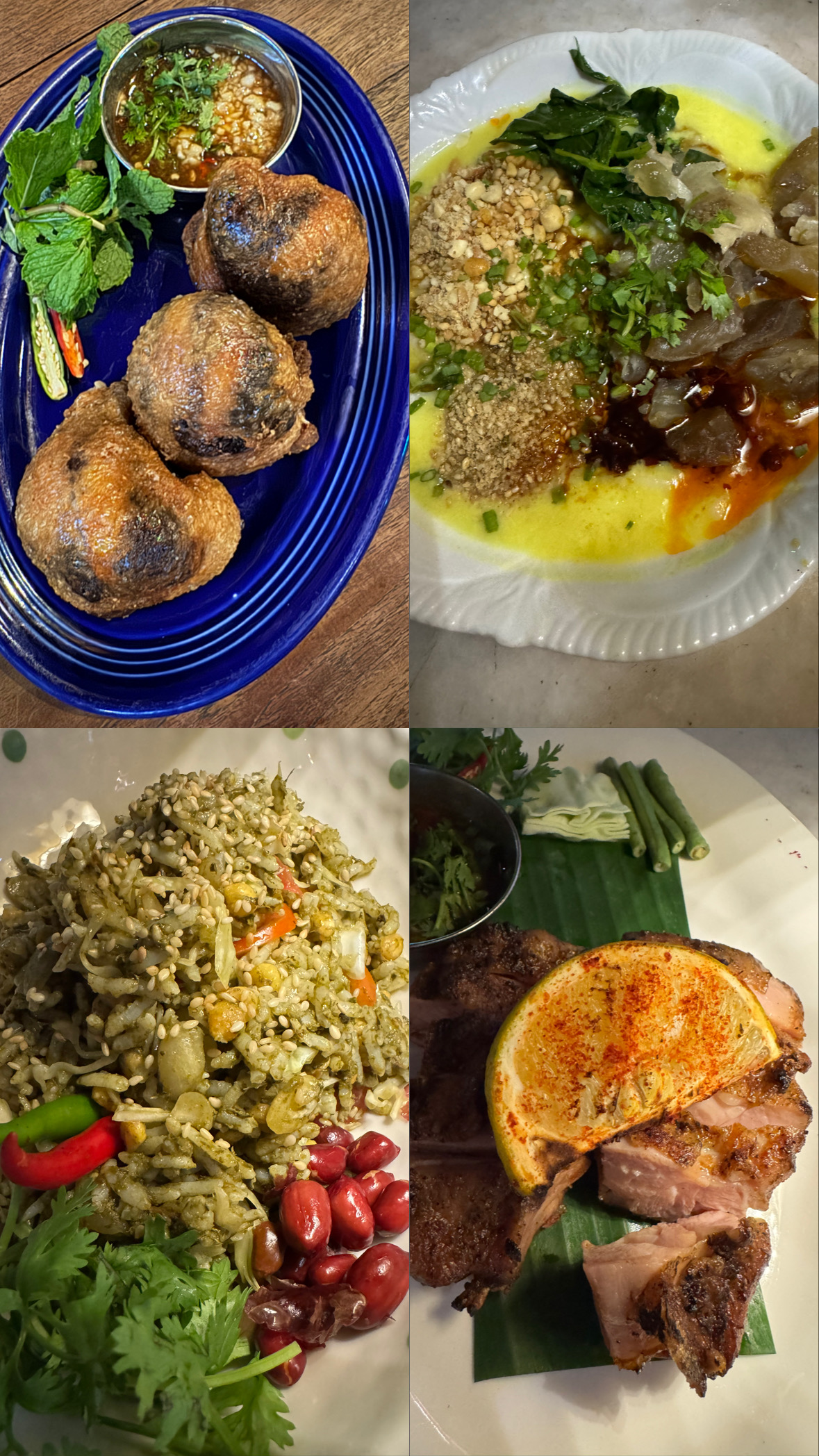
Superb restaurant! I went three times. Popular with both locals and foreigners. Yes, it’s on the bougie side, but the food is just that good. Everything from the tea leaf salad to the Shan noodles was fresh and full of flavor. The menu is expansive and includes international dishes (which I skipped entirely). Inventive cocktails and happy hour prices too.
Feel Myanmar Restaurant
No. 124 Pyidaungzu Yeiktha Street
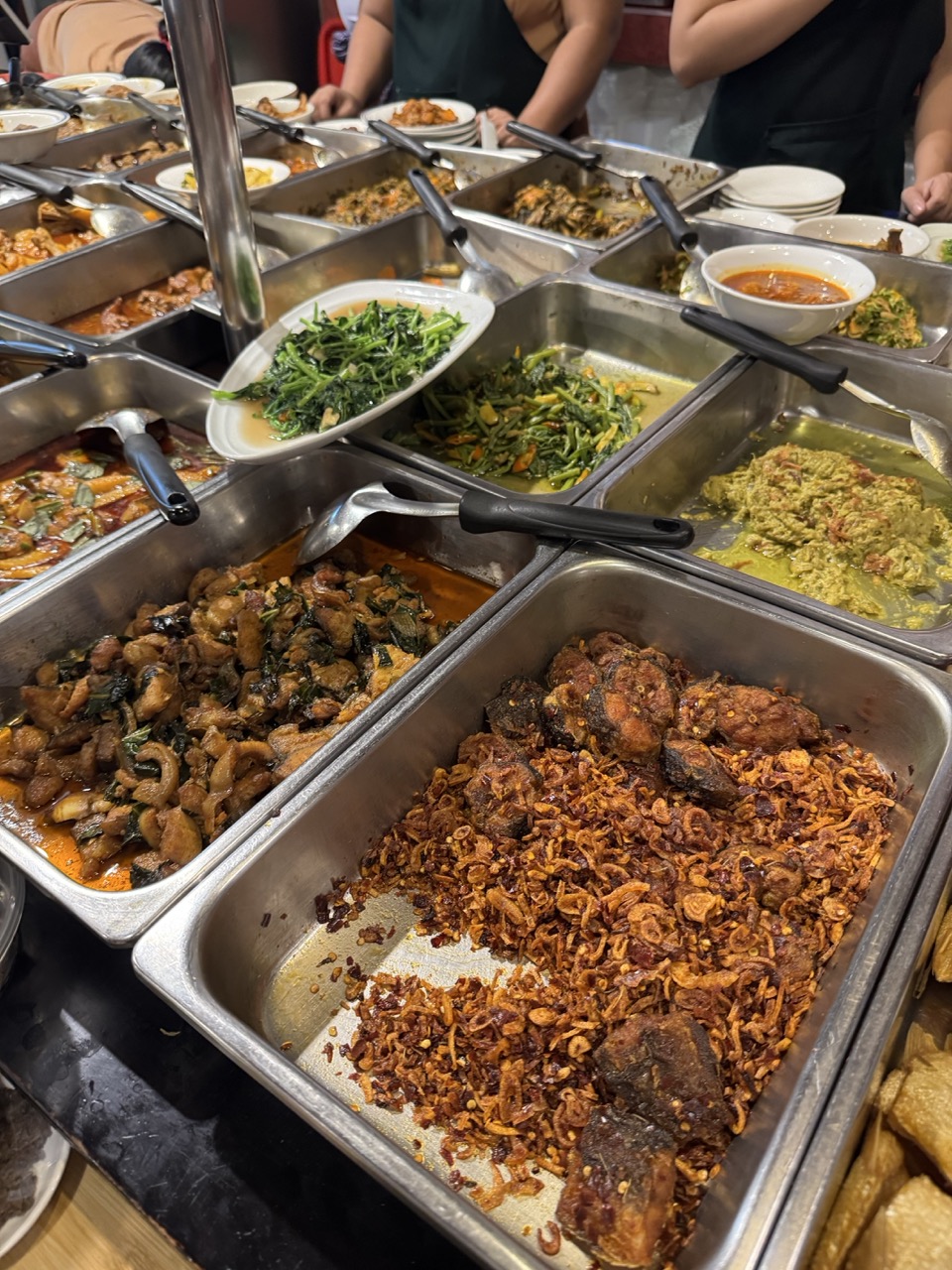
Popular local place, also visited by Anthony Bourdain. Lunch is the time to go. You’ll see lots of workers eat there during that time. Food is served cafeteria-style from a spread of prepared dishes: meats, seafood, vegetables. You can also ask for a small sample if you’re unsure what to get.
Aung Mingalar Shan Noodle Shop
No. 34, Corner of Nawaday Street and Bo Yar Nyunt Rd
I particularly loved this noodle shop, which I discovered while walking around the city. It’s famous for Shan noodles from Eastern Myanmar. The sauce is actually tomato based with minced meat, similar in looks to an Italian ragu, but made with local herbs. The dumplings are excellent too.
A note on food safety: the water supply is not reliably sanitary, so skip the ice and avoid raw street food. Stick to food that’s been cooked thoroughly and ideally served fresh and hot. Tea leaf salad is generally fine since the fermentation process takes care of pathogens.
What to See
You can cover most of the major sites in 1 or 2 days, depending on your own preferences.
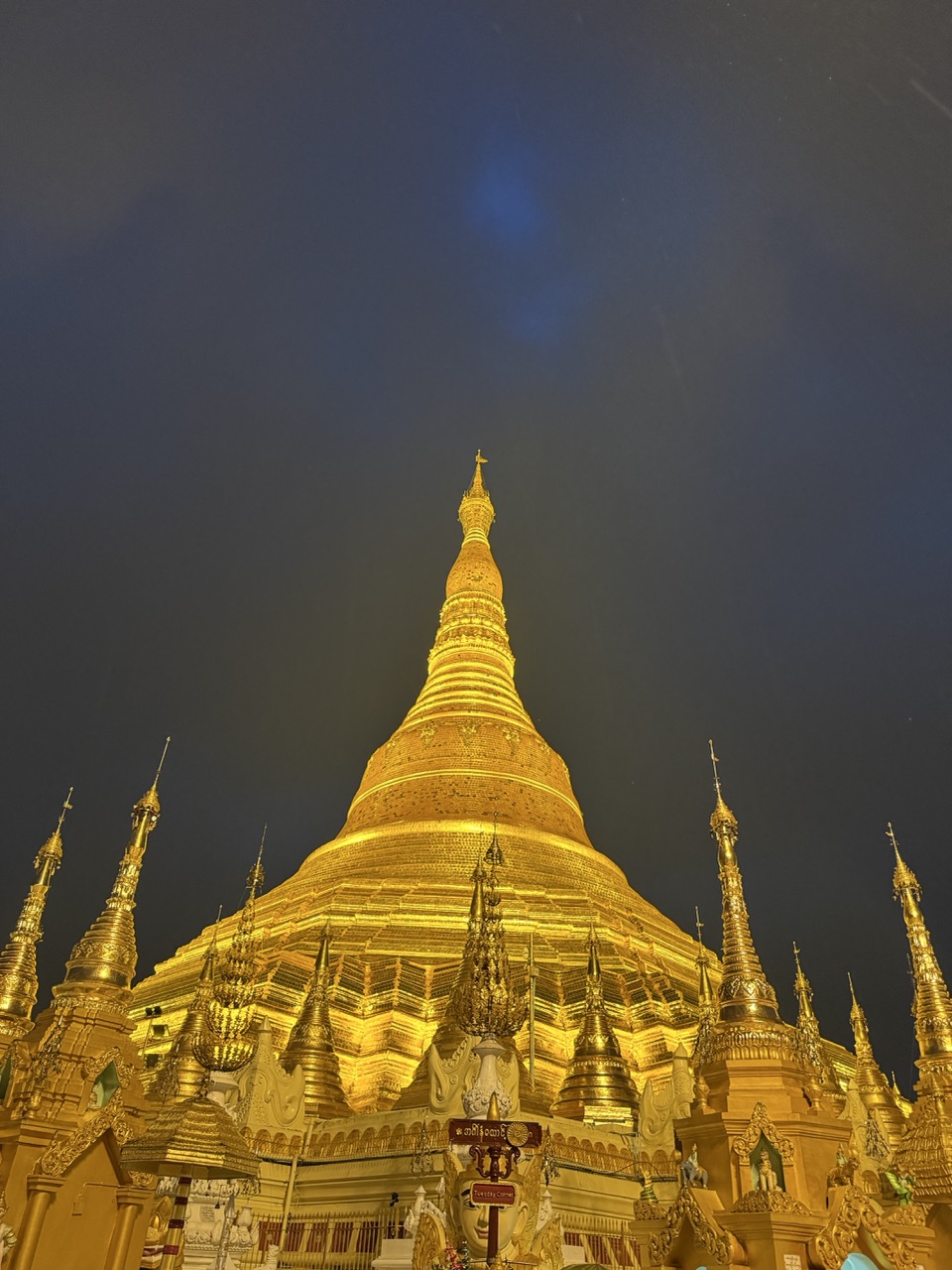
Shwedagon Pagoda – the religious heart of Yangon. Perched on top of a hill in the city, this easily recognizable icon is visible all throughout the city. Go there to meditate, pray, and pay respects just like all the locals do. It’s a truly special place.
Sule Pagoda – another important religious site in the city. Located in the city center of Yangon, it serves as an important community gathering point, both historically and today.
Walking the old colonial quarter – from Sule Pagoda down to about The Strand Hotel is the historic colonial quarter. There the British administration and colonizers at the time constructed a fair number of buildings that still remain today. There are placards all over this neighborhood that explain each historic building.
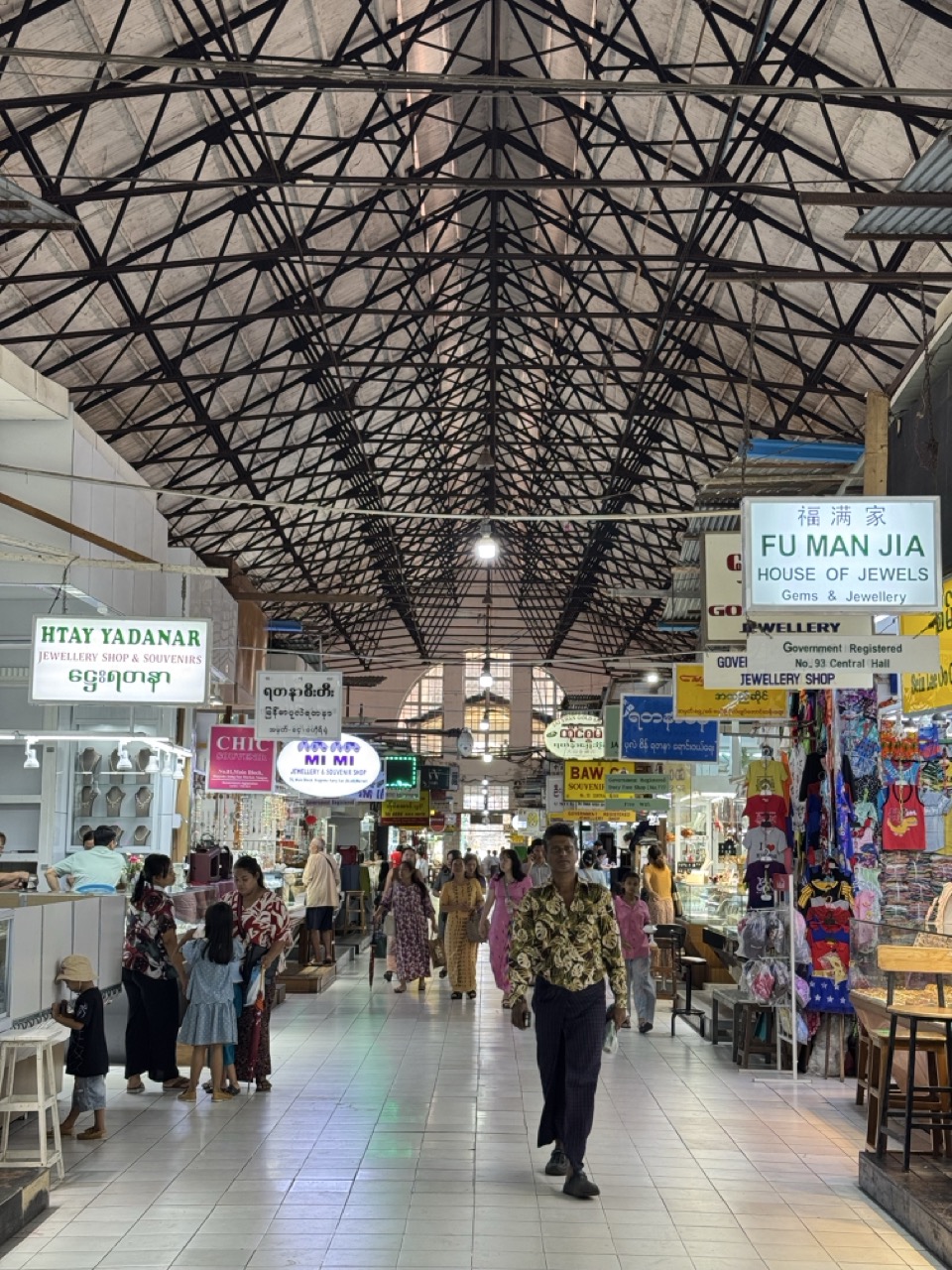
Bogyoke Aung San Market – the main bazaar with merchants selling a wide range of products, most notably jewelry, textiles, artworks, and food products. It’s worth admiring the steel framed structure of the main building, but I didn’t personally buy anything from here. You need to bargain since prices are not usually displayed.
Kandawgyi Lake – a beautiful lake just north of the city center with the impressive Karaweik Palace restaurant (looks like a Burmese Noah’s ark) anchored next to the shore. The lake has cafes and viewpoints of Shwedagon Pagoda in the background.
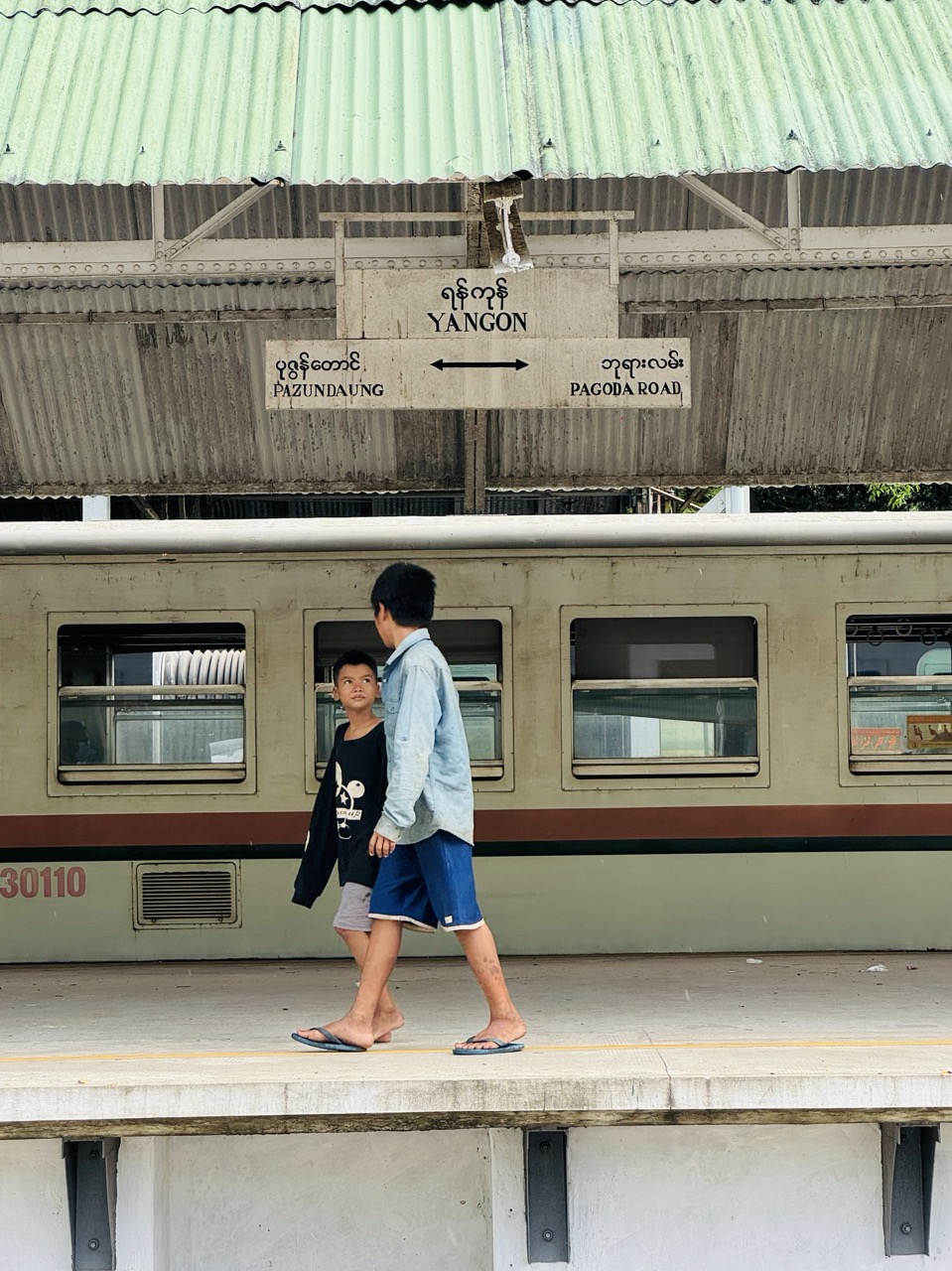
Circular Train Route – one of the highlights. Yangon Central Station has routes to Mandalay and other destinations in Myanmar. There’s also the circular train route, which makes a loop traveling to the suburbs of Yangon and back around. On board you can observe the vibrant daily life unfolding around you – school kids just finished school, sellers returning home for the day. You can board either in the clockwise or counter-clockwise direction. 3 - 4 trains daily. It takes almost 3 hours to complete the entire loop. I took the clockwise route and rode it for about 20 minutes to Kyeemyindaing Station, where there were some cool-looking old defunct rolling stock carriages parked at the station.
Get a guide! Do it at the beginning of your trip. They can give you an intro into Myanmar and show you all the important sites in Yangon without you having to navigate to these locations one by one, and having to learn about the significance of each site via AI. You can email me if you want specific recommendations on guides.
Final Thoughts
Myanmar is a country waiting to be visited. It’s like no other country in SE Asia with its own unique people, food, culture, and history. Come see for yourself.